
Check the card route before you deposit
 Available in US

Card deposits depend on issuer authorisation, while withdrawal handling and costs can follow different processes.
How Debit Card Payments Work at UK Online Casinos
A debit card is a commonly accepted way to add funds to a UK casino account. The card draws on money held in the linked bank account, rather than borrowing against a credit facility. Visa and Mastercard debit cards are among the card types used for this purpose, although the payment must still be processed as a debit transaction.
The basic sequence involves three parties: you, the casino and the card issuer, which is generally your bank. You choose the card option in the casino’s cashier and enter the requested payment details. The casino passes the transaction request through its payment processing arrangements to the issuer. The issuer checks whether it can authorise the payment; if it does, the transaction is completed and the casino credits your account. If it declines the request, the deposit is not completed.
This is a payment authorisation, not a transfer of credit from the bank. With a debit card, the payment is made against the account balance or available funds associated with the card. The casino does not turn the transaction into a loan simply because the card is used online. That distinction matters because the UK rules treat credit-card payments for gambling differently.
When choosing a UK casino site that accepts debit cards, check the payment terms that matter to you, including how long withdrawals may take. Use this list as a starting point and confirm each site's current payment options before signing up.
-
SlotoSport
- Payout speed
- 1-3 business days
SlotoSport lists a payout speed of 1–3 business days. Check its current payment terms to see whether they suit you.
-
SpinFormula
- Payout speed
- 1-3 business days
SpinFormula lists a payout speed of 1–3 business days. Review its current payment information before deciding if it fits your needs.
-
Chanze
- Payout speed
- 1-3 business days
Chanze lists a payout speed of 1–3 business days. Confirm the current terms directly if withdrawal timing matters to you.
-
NightLuck
- Payout speed
- 1-3 business days
NightLuck lists a payout speed of 1–3 business days. Check its current terms to understand how this applies to your chosen payment method.
-
Zombillion
- Payout speed
- 1-3 business days
Zombillion lists a payout speed of 1–3 business days. You can review its current payment terms to see whether they meet your expectations.
-
NightWin
- Payout speed
- 1-3 business days
NightWin lists a payout speed of 1–3 business days. Check the site's current payment information before making a decision.
-
Revery Play
- Payout speed
- 1-3 business days
Revery Play lists a payout speed of 1–3 business days. Confirm its current terms if you want to know how withdrawals are handled.
-
Jetsetspins
- Payout speed
- 1-3 business days
Jetsetspins lists a payout speed of 1–3 business days. Review its current payment terms to see whether they work for you.
-
EvoSpin
- Payout speed
- 1-3 business days
EvoSpin lists a payout speed of 1–3 business days. Check the current terms directly for details relevant to your payment method.
-
Britsino
- Payout speed
- 1-3 business days
Britsino lists a payout speed of 1–3 business days. Confirm its current payment terms to decide whether they suit your needs.
A casino balance is separate from your bank balance. Once a debit deposit is accepted, the amount is recorded in your gambling account, where it can be used under the casino’s account and game rules. The card transaction and the later use of the account balance are related, but they are not the same step: the card funds the account, while the casino’s system records and applies the balance.
The cashier is the point at which the payment route is selected. It may show a card option and ask for information needed to submit the transaction. The wording and layout differ between casinos, but the underlying purpose is consistent: identify the payment method, pass a request for authorisation and, if approved, update the casino account. Do not assume that seeing a card brand in general information means every card product or every transaction will work; the cashier is where the available payment options for your account are displayed.
A debit-card transaction should not be confused with a credit-card payment routed through a wallet or another intermediary. UK rules prohibit remote gambling operators from accepting credit-card payments for gambling, including credit-card funds routed through a money service business. Operators also cannot accept wallet payments where the wallet allows credit-card funds to be used for gambling. Changing the route does not change the underlying source of the money.
The UK regulator introduced the ban on credit-card gambling on 14 April 2020, and it remains in force. The restriction is specifically about credit-card payments for gambling; it does not mean that all card payments are treated as credit. A debit card connected to a bank account is a different payment instrument. The relevant distinction is the source and type of funds, not simply whether the payment is made using a plastic card or entered into an online form.

For a remote gambling licensee serving customers in Great Britain, payment acceptance sits within a regulated account process. The operator must verify a customer’s age before allowing a deposit, and it must prompt a new customer to set a financial limit before the first deposit. These account controls do not alter how a debit-card authorisation works, but they form part of the conditions around opening and funding a gambling account. Online gambling is legal in the UK only at sites holding the relevant UK Gambling Commission licence.
When you see a debit-card deposit option, think of it as a chain of separate actions: you request a payment, the issuer decides whether to authorise it, and the casino records the approved amount in your account. A successful card authorisation does not mean that a credit facility has been used, nor does it remove the operator’s duties around age checks and account controls. It is simply the mechanism by which funds are moved from a debit-linked account into a casino balance.
Check Card Acceptance Before You Register
A casino’s payment page may display Visa or Mastercard without confirming that your particular debit card can be used for a deposit. The brand identifies the card network, but acceptance can also depend on the card product and whether the operator currently supports that transaction for customers in the UK. Treat a logo or general payment-method list as an indication to check further, not as confirmation.
The cashier is the practical place to verify availability. If the site lets you view its deposit options before you open an account, look for the card method there. If access requires registration, check the operator’s payment information first, then confirm the option in the cashier before attempting a deposit. A card listed on an information page may not appear as a selectable method when you sign in.
Check the card you actually hold
Start with the card itself. Confirm whether it is a debit card and identify its network, such as Visa or Mastercard. Do not assume that every card carrying the same brand has the same eligibility. A site may list Visa, for instance, while the cashier does not offer the card product in your hand or does not allow it for your current UK account.
If the cashier displays a card option, read any conditions beside it. Check that the option is for deposits and that the stated availability applies to your location and account. A generic logo in a footer, a payment-method graphic or an old review does not establish that the cashier will accept your card now.

Where the conditions are unclear, ask the operator’s support team a narrow question: whether your specific debit-card network and product can be used for a deposit from a UK account. Give only the information needed to identify the payment type. Do not send a full card number, security code or other sensitive credentials in a support message.
Use the cashier as the final check
Payment options can depend on the account and the operator’s current setup. That is why a site described as an online casino that accepts debit cards may still not offer a usable card option to every customer. The cashier is more relevant than a broad description because it shows the methods available for the account you are actually using.
Check the deposit screen before entering payment details. If Visa or Mastercard appears as a selectable method, inspect the accompanying terms and make sure they refer to debit-card deposits. If the cashier offers only another route, do not infer that the card will work because its brand appears elsewhere on the site.
A failed attempt is not a reliable way to test general acceptance. It may leave you unsure whether the issue is the card product, the account, the details entered or a temporary transaction restriction. Confirm the method first, and contact support if the cashier and the written payment information do not agree.
Do
- Confirm your card is a debit card and identify its network
- Read conditions for deposit availability in the cashier
- Ask support specific questions about your card product
- Verify if the selectable method refers to debit deposits
Don't
- Assume every card of the same brand is eligible
- Rely on footer logos or old reviews for confirmation
- Send full card numbers or security codes to support
- Infer card acceptance from a general brand listing
Separate brand claims from usable options
A site can name a card network without guaranteeing that every card under that network is eligible. The same distinction applies when comparing casinos that accept debit cards: a brand listing is a starting point, while the live cashier confirms whether the method is available for your circumstances.
Be precise about what you are checking. “Do you accept Visa?” may produce a broad answer that does not resolve whether your debit card can be used. Ask whether the specific card type is supported for a UK customer and whether it can be selected for a deposit. If the answer is general, request clarification before registering or attempting payment.
You can make the check in a simple order:
- Identify the debit-card network and product.
- Read the operator’s current payment information.
- Check the cashier for a selectable card-deposit option.
- Confirm any location or card-product conditions with support if they are unclear.
This avoids treating a list of logos as a promise. Whether you are comparing an online casino that accepts debit cards or several casino sites that accept debit cards, use the same standard for each: the current cashier must show an applicable option, and any uncertainty about your card should be resolved with the operator before you proceed.
Compare the Full Cost of a Deposit
The amount you authorise is not always the amount that ultimately reaches your casino balance. A payment route can involve charges at several points: the casino, the payment provider, your card issuer or bank, and the payment network. If the transaction involves a currency conversion, the exchange rate can add a further cost. Comparing only a casino’s stated deposit fee can therefore give you an incomplete picture.
A specialist review of casino payment costs identifies these charges as possible parts of a transaction, rather than a fixed set that applies to every deposit. Which ones matter depends on the route and the terms of the organisations involved. Check the casino’s cashier and payment terms, then check the information from your provider and bank. A fee may be charged separately, incorporated into an exchange rate, or not apply to your transaction at all.

Follow the payment from authorisation to balance
Start with the amount you intend to deposit, then trace what may be deducted before it appears in your account. The casino may apply a charge to the deposit. A payment provider may also have a fee, while your bank or card issuer may charge for processing the transaction. Network costs can form another part of the total, depending on the payment route.
These costs do not necessarily appear together on one screen. The cashier may show the amount sent to the casino without displaying every charge that could be applied by a provider or bank. Your bank statement may show a separate fee, while a conversion cost may be reflected in the rate rather than listed as a distinct item. That means the figure shown at one stage is not always enough to establish the final cost.
For a useful comparison, look at the amount leaving your account and the amount credited to the casino balance. Then identify any separate deductions or conversion applied along the way. If the casino states that it charges no deposit fee, treat that as information about the casino’s charge only; it does not establish that the provider, bank, or network will also charge nothing.
Account for currency conversion
Currency matters when your payment account and the casino balance use different currencies. In that case, the transaction may be converted by the casino, payment provider, card network, or bank, depending on the route and its terms. The exchange rate used may include a spread: the difference between the rate applied to your transaction and a reference rate.
A spread can be less visible than a flat fee because it may not appear as a separate line on the transaction. A specialist review of payment costs cautions that this conversion margin can exceed a clearly displayed fixed charge. The practical implication is not that conversion is always more expensive, but that a visible fee alone cannot tell you which route costs less.
Check which currency the casino will charge and which currency your payment account uses. If a conversion is involved, find out which organisation sets the rate and whether it adds a margin. Where the rate is not clear before you confirm the payment, do not assume that the amount shown in the cashier represents the full cost.
Compare like with like
There is no single payment method that is automatically the lowest-cost choice for every deposit. The total depends on the actual amount, the casino’s terms, provider fees, any bank or issuer charge, conversion spread, and network costs. A method with no stated casino fee may still cost more overall if another charge or less favourable exchange rate applies.
Compare the same intended deposit across the payment routes available to you. For each, record the casino’s charge, any fee stated by the provider or bank, whether currency conversion occurs, and the rate or margin used. Include network costs if the payment information identifies them. If a charge cannot be confirmed, keep it as an unknown rather than treating it as zero.
This comparison should be based on the route you would actually use, not a general claim that one category of payment is cheap. Fees can depend on the provider’s terms, your bank’s conditions, the currencies involved, and the transaction itself. A route that costs less for one person may not have the same cost for another.

Before confirming a deposit, review the final amount and currency presented to you. After the transaction, compare the casino credit with the account statement and any provider record. This helps distinguish a casino fee from a bank charge or a conversion difference, so you can assess the full cost rather than relying on a headline fee alone.
Where Your Debit Card Withdrawal Goes
A withdrawal from a UK debit card casino does not necessarily go to whichever account you select at the last moment. The casino may first check where the money came from, then direct the payout back to that payment source. This is known as a closed-loop approach: the deposit and withdrawal remain linked rather than moving through unrelated accounts.
That routing reflects anti-money laundering and anti-fraud controls. UK rules generally require gambling businesses to return funds to the original payment source where possible. Sending money back along the route used to fund the account helps the casino check that the payout is reaching the customer who made the deposit. It also makes it harder to use a gambling account to pass funds between people or payment methods.
Why the original source matters
When you deposit with a debit card, the casino records information associated with that transaction and the account details you supplied. If you later request a withdrawal, it can compare those records with the payout instructions. Matching details make it easier to establish that the same customer is involved at both ends.
A mismatch does not necessarily mean that a withdrawal will be refused. It can, however, create a reason for the casino to ask for more information before releasing funds or to consider another payout route. For example, the account holder’s name may differ from the name attached to a payment method, or the requested destination may not be the source used for the deposit. In those cases, the casino has to resolve the ownership question rather than treating the request as a routine return.
Using your own casino account and a payment route in your own name reduces the chance of avoidable friction. It does not remove the casino’s checks, but it keeps basic ownership details consistent. Do not use another person’s card or account to fund your gambling account: even where that payment appears to go through, it can make it harder to show who supplied the money and who is entitled to receive a payout.
When a different route is proposed
The original source may not always be available or suitable for a return. If the casino offers an alternative, it may need to verify that route and confirm that it belongs to you. That is a control, not simply a preference about which payment method is more convenient.
Read the cashier’s instructions before choosing an alternative. Check whether the casino says the withdrawal must return to the card used for the deposit, whether it can use another payment method already registered to you, and what evidence it may request if the original route cannot be used. Do not assume that being able to deposit with a method means you can choose any other method for a withdrawal.

If a card has been replaced, closed or otherwise changed since you deposited, contact the casino through its official support channel and explain the change. The casino can tell you how it handles that situation and whether it needs documents or updated payment details. Avoid submitting someone else’s account as a substitute; that creates a further ownership mismatch instead of resolving the first one.
Keep the transaction trail coherent
For UK debit card casinos, the practical point is to keep the account and payment details aligned. Register with your own accurate details, deposit from a payment method belonging to you, and follow the withdrawal route shown in the cashier. If the casino asks you to confirm ownership, provide only the requested information through its secure process.
A casino may apply checks even when all details appear to match. The purpose of consistent details is narrower: they reduce the chance that a basic discrepancy interrupts the transaction. Returning funds to the original source remains a common anti-fraud and anti-money laundering measure, while an alternative route can bring additional verification. These rules determine where the payout is sent; they do not by themselves establish how quickly it will arrive.
Can You Use a Debit Card to Gamble Online?
Yes. UK-licensed online casinos commonly accept debit cards, so you can use one to fund a gambling account where the operator supports your card. A debit-card payment draws on the funds available through your bank account, rather than providing a credit facility for gambling. The exact card and transaction still need to be eligible, but the key distinction is whether the payment uses debit or credit.
Credit-card payments for gambling are prohibited at UK-licensed casinos. The regulator introduced the ban on 14 April 2020, and it remains in force. A casino cannot accept a credit card for a gambling deposit, even if the card is issued by the same bank as your debit card. The rule is about the source of the payment, not simply the name of the bank or the appearance of the card.
This also matters when a payment is routed through another service. A wallet or money service cannot be used to get around the credit-card restriction: remote gambling operators cannot accept credit-card funds for gambling through those routes. If you are choosing a payment method, check that its funding source is permitted, rather than assuming that an intermediary changes the type of payment.
A debit card is not the same as a promise that every payment will be accepted. The operator must support the card and the transaction must meet its requirements. But if the payment is genuinely made using a permitted debit-card route, it is not covered by the credit-card gambling ban simply because both products may carry a similar card brand.
Only online gambling at sites licensed and regulated for the UK market is legal in the UK. For operators serving Great Britain, that means holding the relevant UK Gambling Commission licence. The payment rule does not make an unlicensed casino lawful, nor does the availability of a debit-card option establish that an operator is authorised.

In practical terms, you can deposit at an online casino with a debit card when the casino accepts that payment and the card transaction is a debit payment. You cannot use a credit card for gambling at a UK-licensed casino, whether directly or through a route that passes credit-card funds to the operator. Distinguishing those two cases answers the permission question; it does not guarantee that a particular card product or transaction will work.
Deposit Minimums and Account Limits
A debit-card deposit has two separate thresholds: the casino’s minimum for accepting a payment and the maximum allowed through that payment route. Neither tells you how much you should deposit. A specialist review places common starting minimums in the £10–£20 range, with the exact figure depending on the selected method. Check the cashier before entering an amount: the displayed minimum for your card is more useful than a general guide, and it can differ from the minimum shown for another payment option.
Maximums can apply per transaction, per day or per month. The applicable ceiling may depend on the payment method and your account status, so a card limit is not necessarily the same as a limit for another route. If a deposit is declined because it exceeds a payment cap, reducing the amount to within the stated limit may resolve that issue; it does not change any separate financial limit on your account.
Account-level limits serve a different purpose. UK Gambling Commission rules require remote gambling operators to ask new customers to set a financial limit before making their first deposit and to make account-level limit controls accessible. These controls let you set boundaries for your own gambling activity. A payment-method maximum, by contrast, is a transaction restriction set by the casino or payment route. Meeting one does not override the other: a deposit must fit both the payment rules and the limits on your account.
Checking Deposit Limits
-
1
Check payment thresholds
Review the cashier to find the specific minimum and maximum deposit amounts allowed for your debit card.
-
2
Review account limits
Check the financial limits you have set for your own gambling activity within your account settings.
-
3
Verify compatibility
Ensure your intended deposit amount falls within both the payment route's boundaries and your personal account limits.
Before paying, check the cashier’s minimum and maximum for your debit card, then review the financial limits displayed in your account. If the amount you intend to deposit falls outside either boundary, do not assume that switching payment routes will change your account limit. Keep the two types of restriction distinct when comparing casino sites that accept debit-card deposits: the cashier shows what the payment route permits, while your account controls reflect the limit you have set.
Why a Fast Card Deposit Does Not Guarantee a Fast Withdrawal
A debit-card deposit and a withdrawal are separate transactions. A deposit may appear in your casino balance quickly, but that does not mean a later payout can bypass the casino’s approval process or the payment method’s delivery time. If you play slots with a debit card, the speed of that deposit still tells you little about when an approved withdrawal will reach you.
A withdrawal first has to be reviewed by the casino. The operator may need to complete KYC checks or resolve an account issue before approving the request. Specialist reviews note that first withdrawals can take longer when verification is still outstanding; the timing therefore depends partly on whether your account is fully verified and how the casino handles approval.
Only after approval does the payment method’s delivery stage begin. The casino’s processing time and the time taken by the payment route are distinct. A quick decision from the casino does not mean the funds arrive immediately, and a fast deposit method does not establish how quickly it handles withdrawals.

Specialist reviews describe PayPal, open banking services and debit cards connected to fast payout systems as options that can rank among the quicker withdrawal routes. That is a comparison of payment methods, not a guarantee for a particular casino or transaction. Check the operator’s stated withdrawal process and the payment method’s terms, including whether it is offered for withdrawals.
When comparing fast withdrawal options, separate the questions: how long can casino approval take, and how long does the payment provider take after approval? Look for information about verification requirements and the stages in the operator’s payout process. If a casino quotes a single overall estimate, check whether it includes both stages or only the time after approval.
The useful measure is not the speed of your last deposit but the full path from withdrawal request to receipt. Until the casino has approved the payment and the delivery stage is complete, those are separate points in the process.
Debit Cards and GamStop: Do Not Treat Payment Access as a Workaround
A debit card being accepted does not mean you are permitted to gamble or that a site is suitable for you. Searches for casinos outside GamStop that take debit cards can blur those separate issues. Payment access describes how an operator may accept funds; GamStop is a self-exclusion scheme intended to help people restrict their access to gambling. A card should not be treated as a way around a decision to self-exclude.
If you have enrolled in GamStop, do not try to open another account to continue gambling. Instead, use the exclusion to create distance from gambling and seek support if you are finding it difficult to maintain. A payment method cannot cancel or replace a self-exclusion choice.
Account safeguards apply independently of the card. Remote gambling licensees must make new customers set a financial limit before they make their first deposit, and must keep account-level limit controls accessible. These controls let you set boundaries for your account; they are not payment-card features. The card issuer does not decide whether you should gamble, and a successful payment does not show that gambling is safe for you.
For anyone considering a casino that is not connected to GamStop, the key distinction is between access and protection. A site accepting debit cards may still lack the account-level restriction you expect from a self-exclusion scheme. Do not assume that using a different card, or finding a different payment route, changes the purpose of your exclusion.
If gambling is causing harm, avoid making another deposit while seeking help from a trusted person or a gambling-support service. If you are already self-excluded, treat that decision as the boundary—not as a technical obstacle to work around.

Using a Visa Debit Card
Visa appears alongside Mastercard in payment information published by specialist casino reviews. That listing is a useful indication of a card brand to look for, but it does not confirm that a particular Visa debit card can be used at a particular casino. The cashier is the relevant check: it shows the payment methods available for your account at the time you intend to deposit.
A Visa logo alone is not enough to establish eligibility. The casino’s current UK availability and the specific card product both matter. If Visa is displayed, check that the option is explicitly available for a debit card and that the cashier allows you to proceed with your card details. If the method is absent or the transaction is declined, the brand name in a review does not override the cashier’s current decision.
Keep the distinction between Visa debit and credit clear. UK-licensed casinos cannot accept credit-card payments for gambling, so a Visa logo should not be read as permission to use a Visa credit card. Select only the debit-card option that matches the card you hold.
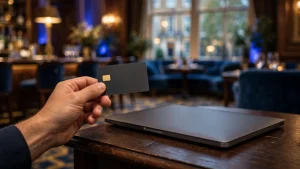
Before confirming a deposit, check that the account details and payment details are yours and review the cashier’s instructions. If the payment screen presents a different card type or does not identify Visa debit as available, do not assume that another Visa product will work. Availability can differ between casinos and can change, so confirm it directly rather than relying on a general brand listing.
Choose a Payment Route You Can Use Consistently
Before choosing a casino, check whether its account settings and payment details fit the way you intend to use your debit card. A card appearing in a cashier is only one part of compatibility: the account currency and the ownership details attached to the payment route also matter.
Confirm the account currency before making a transaction. Specialist reviews of casino payment options report that some sites support GBP, but that does not establish the setting for every account. If your account is held in another currency, a card payment may involve conversion. Check the currency shown in your account or cashier rather than assuming it will match the currency of your bank account.

Next, use payment details that belong to you and match the name on your casino account. Consistency helps avoid preventable questions about who controls the funds. If you register in your own name but try to pay through someone else’s card or account, the mismatch can create friction even if the payment method itself appears to be available.
A practical check is to compare the account name, the cardholder name and the account currency before submitting the deposit. If one of these does not match your intended setup, resolve the discrepancy with the casino before paying. Do not rely on a payment route that you cannot use consistently for account activity.
For a straightforward arrangement, keep one named payment account for deposits and withdrawals where the casino permits it. This makes the connection between your account and payment details easier to follow. It does not guarantee that a transaction will be accepted, but it reduces avoidable complications caused by mismatched ownership information or an unexpected currency setting.
Are Visa and Mastercard deposits definitely debit cards?
No. Visa and Mastercard identify the card network, not whether a specific card is debit or whether a casino accepts it; check that your card is a debit card and that it appears in the cashier.
Why can a fast payout casino still delay my withdrawal?
The casino must approve the withdrawal, and its checks can take longer for a first payout if your account still needs verification. Your account being fully verified can help avoid that delay.
Why must withdrawals return to the deposit method?
Returning funds to the original payment source is a common anti-fraud and anti-money-laundering control. Using another route may involve additional verification.
What is the fastest withdrawal method for UK casinos?
PayPal, open banking services and debit cards linked to fast payout systems are generally among the quickest options. The casino’s approval process and your verification status also affect how quickly you receive funds.
Do UK casino withdrawals require verification?
Verification may need to be completed before a withdrawal is approved, particularly for a first payout. A casino’s checks can therefore add time to the process.
What is the current minimum deposit?
The minimum deposit usually starts at £10–£20, depending on the payment method.
Can I deposit in GBP?
Yes, GBP is supported at the sites covered here. Confirm your account currency before depositing to avoid conversion.
Payments at UK Casinos: Cards, E-Wallets and Crypto
Content created by the «goodthingsshare» team