
Check USDT support before you fund an account
 Available in US

Tether availability can vary by account, so payment pages and reviews need confirmation in the current cashier.
How to Check Whether a Casino Accepts USDT
A casino may mention Tether, or USDT, on an information page without making it available to every customer. The useful check is not whether the currency appears somewhere on the site, but whether it is offered as a payment method to your UK account in the casino’s current cashier.
Start with the operator’s payment information, but treat it as an initial indication rather than confirmation. A page may describe methods supported in other countries, refer to a general set of cryptocurrencies, or remain online after payment arrangements have changed. Specialist casino reviews can also list payment methods based on information gathered at a particular time. If a review says that a site accepts Tether, use that as a reason to check the operator’s own cashier, not as proof that the option is available to you now.
Check the cashier for your account
Sign in and open the cashier or payments area. Look for the list of deposit methods available to your account and check whether Tether or USDT is shown as a selectable option. A logo on a promotional page, a cryptocurrency guide or a general list of supported currencies is not equivalent to an active cashier option.
When you’re looking at casinos that accept Tether in the UK, payout timing is one detail worth checking. Use the information below as a starting point, and confirm each casino’s current Tether options before you sign up.
-
SlotoSport
- Payout speed
- 1-3 business days
SlotoSport lists a payout speed of 1–3 business days.
-
SpinFormula
- Payout speed
- 1-3 business days
SpinFormula lists a payout speed of 1–3 business days.
-
Chanze
- Payout speed
- 1-3 business days
Chanze lists a payout speed of 1–3 business days.
-
NightLuck
- Payout speed
- 1-3 business days
NightLuck lists a payout speed of 1–3 business days.
-
Zombillion
- Payout speed
- 1-3 business days
Zombillion lists a payout speed of 1–3 business days.
-
NightWin
- Payout speed
- 1-3 business days
NightWin lists a payout speed of 1–3 business days.
-
Revery Play
- Payout speed
- 1-3 business days
Revery Play lists a payout speed of 1–3 business days.
-
Jetsetspins
- Payout speed
- 1-3 business days
Jetsetspins lists a payout speed of 1–3 business days.
-
EvoSpin
- Payout speed
- 1-3 business days
EvoSpin lists a payout speed of 1–3 business days.
-
Britsino
- Payout speed
- 1-3 business days
Britsino lists a payout speed of 1–3 business days.
Where the cashier separates methods into categories, inspect the cryptocurrency category rather than assuming that a general payment list is complete. If USDT appears only in an explanatory article or a page about the operator’s services, it may not be enabled for your account. Conversely, a method shown as an actual selection in the logged-in cashier is stronger evidence of availability than a statement on a public page.
The distinction matters because payment pages can describe more than one market. Specialist reviews of casino websites have mentioned card brands, bank transfers, e-wallets and several cryptocurrencies, but a list assembled across sites does not establish which methods any particular UK account can use. Even a current operator page may describe a payment method that is limited by location or account eligibility.
Check that the information applies to the UK
Confirm that the account is registered for the UK and that the cashier is displaying the options for that account. A site can have different payment arrangements for customers in different countries. An option visible in a general guide, or in information intended for another market, does not establish that it is available to a UK customer.
If you have not created an account, public payment information can help you identify what to ask, but it cannot always show the methods that will appear after registration. Avoid treating a UK flag, UK wording or a general claim of international availability as confirmation of a specific payment option. Look for an explicit statement about UK availability, then compare it with what the cashier shows after you sign in.

The account’s currency is another detail to check in the cashier or account settings. Specialist pages describing casino payment support have stated that GBP is supported, but your account currency should be confirmed before your first transaction. Currency settings can affect whether a conversion is involved; a general statement about GBP does not tell you which currency is assigned to your particular account.
Treat card lists as a useful comparison, not proof
A casino’s payment page may display familiar methods such as Visa or Mastercard alongside cryptocurrency options. That list does not prove that each method is available to every UK customer. Current UK availability and the eligibility of a particular card product need to be checked in the cashier. The same principle applies to USDT: a method can be named in a site-wide list yet fail to appear as an available choice for your account.
If the cashier does not show USDT, check whether the page has filters, separate tabs or a country setting that could be hiding relevant options. If it still does not appear, ask the operator’s support team whether Tether is currently available to UK accounts. Ask about availability specifically, rather than relying on a broad question about whether the casino “takes crypto”; the answer to that broader question might refer to another cryptocurrency or a different customer market.
Do
- Sign in to your account to check the active cashier
- Verify the operator's status on the UKGC public register
- Confirm the specific payment options available for your UK account
Don't
- Rely on logos on promotional pages as proof of availability
- Treat general cryptocurrency lists as confirmation for your account
- Assume a UK flag or wording proves a specific payment method works
For a UK-facing casino, check the operator’s status on the UK Gambling Commission public register as part of assessing whether it is authorised to serve the market. Remote gambling licensees offering services to customers in Great Britain must hold the relevant UKGC licence. A payment option does not establish that status, just as a licence listing does not establish that Tether is in your cashier.
Before treating a Tether casino online as a usable option, confirm three separate points: the operator serves the UK under the required licence, its own current information names USDT, and the logged-in cashier actually offers it to your UK account. If those checks do not agree, ask the operator to clarify rather than assuming that a general cryptocurrency reference applies.
Using Tether at an Online Casino: Deposits and Withdrawals
A Tether payment has two separate legs: funds move from your wallet to the casino when you deposit, then any approved payout must move from the casino back through an accepted withdrawal route. Do not treat a deposit button as proof that the return journey is available. Before paying, check the cashier’s information for both deposits and withdrawals, including any conditions attached to using the same payment account.
From wallet to casino balance
Start by signing in to your casino account and opening its cashier or payments area. Select Tether only if it is presented as an available deposit method for your account. The cashier should then show the details needed to make the payment, such as a destination address or a payment request. Follow the instructions displayed there and check that the amount and destination match what you intend to send before confirming in your wallet.

The casino account balance is the point at which the payment becomes usable for play. Until the cashier or account history shows that the deposit has been credited, do not assume that a wallet transfer has completed the casino-side process. If the transfer appears in your wallet but not in the casino balance, use the payment status and transaction information shown in the relevant accounts when contacting support. Avoid sending another payment simply because the first has not yet appeared.
This is separate from deciding which blockchain network to use. The payment instructions must be followed exactly, but network compatibility is a distinct check; do not infer that a particular network is supported merely because the cashier accepts Tether.
Before you deposit, inspect the cash-out route
A casino can display Tether for deposits without making it available for withdrawals. It may also impose a closed-loop rule: a payout is returned through the payment source used to fund the account, where that route supports withdrawals. UK anti-money laundering requirements commonly call for winnings to be returned to the original payment source. That means the route used for the deposit can shape the route available when you cash out.
Before transferring funds, find the cashier’s withdrawal information or ask support to confirm, in writing if possible, whether Tether is available for both directions on your account. Check whether the same Tether account must be used, whether a different payout route could be requested, and what steps would apply if the original route cannot receive a withdrawal. Do not rely on a general payments page if it does not distinguish deposits from cash-outs.
The cleanest arrangement is often to use one account in your own name consistently for deposits and withdrawals. Using an account and payment route that belong to the same customer can reduce avoidable questions about who owns the funds. It does not remove the casino’s checks or guarantee that a particular payment route will be permitted.
What happens when you request a withdrawal
After play, the cashier may ask you to choose a withdrawal method and enter the amount to request. The casino then processes the request under its own procedures. A displayed request or pending status is not the same as funds arriving in your wallet: the casino’s approval comes first, followed by the transfer through the selected route.
A specialist review of casino withdrawals notes that processing can include internal approval and may take longer for an initial payout while account checks are completed. Treat any stated processing estimate as an operator-specific condition, not a promise that funds will arrive at that point. Check the cashier’s terms for the stages involved and look at the account status if a request remains pending.
If the withdrawal method differs from the deposit route, the casino may require additional checks or may direct the payout back to the original source. Ask before depositing if you expect to use Tether for cash-out; resolving a mismatch after funds are committed can create unnecessary delay. Keep the casino’s confirmation and your own wallet records so you can identify which stage a payment has reached.

Tether can make the payment route visible, but it does not by itself establish that the full deposit-to-withdrawal journey is supported for your account. Confirm both directions first, use the same customer-owned account where possible, and follow the cashier’s instructions at each stage.
What a Tether Casino Payment Can and Cannot Tell You
Seeing Tether, or USDT, among a casino’s payment options tells you that the operator presents it as a possible way to fund an account. It does not, by itself, tell you which services are enabled for your account or what conditions apply. A payment label is evidence of an advertised option, not a complete description of how that option works for every customer.
The distinction matters because a payment method sits within several separate arrangements: the casino’s account rules, the payment service available to you, and the details attached to your own account. A Tether option therefore cannot establish that every account can use it, that every transaction is treated in the same way, or that a particular service is available in both directions. Those points depend on the operator’s terms and the options actually provided for your account.

Nor does seeing USDT identify every condition attached to using it. The label alone does not explain how an account is denominated, what restrictions apply, or whether an advertised feature is available to a particular customer. Treating the payment name as if it answered those questions would confuse the existence of a method with the rules governing its use.
The payment option also says nothing by itself about the status of the casino. In the UK, real-money gambling is legal only through sites holding the relevant UK Gambling Commission licence. A cryptocurrency symbol on a cashier is not evidence of a licence, and it does not replace the need to consider the operator’s regulatory status.
There is a separate ownership question. When account details and the payment route belong to the same customer, there is less scope for basic ownership mismatches to cause avoidable friction. This does not guarantee that a transaction will be accepted; it simply removes one source of uncertainty. If the route and account appear to belong to different people, the operator may need to establish who controls the funds and account.
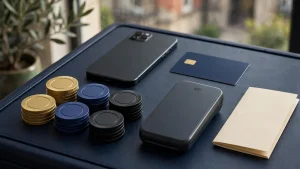
Returning funds to the original payment source is a common anti-fraud and anti-money-laundering control. An alternative route may involve additional verification. That principle is useful when interpreting a Tether option: its presence does not mean that you can choose any destination for funds or that the casino will treat every route as interchangeable. The relevant account and payment rules determine what is permitted.
Keep these points distinct. The payment label identifies a stated method; it does not settle the account-specific conditions, ownership checks, or the operator’s regulatory status. Those are separate questions, and one cannot be inferred from the appearance of USDT alone. A careful reading avoids treating a single cashier entry as a promise about the whole account relationship.
Tether, Gamstop and UK Account Controls
A Tether option in a cashier tells you about a payment method, not about the casino’s relationship with Gamstop. It does not show whether the operator participates in the scheme, whether an account is eligible to open, or whether any existing restriction applies. Those are separate questions from whether the site lists USDT.

Check the operator’s own account and safer-gambling information for its Gamstop position. Do not treat a casino that accepts Tether as an alternative route around a self-exclusion or other account restriction. Changing the payment method does not change the status of an account or remove a safeguard. If you have excluded yourself from gambling, do not use another payment route to try to regain access.
The distinction matters because a casino with Tether may serve customers under different regulatory arrangements. Online gambling is legal in the UK only through sites licensed and regulated for the market. Remote gambling licensees serving Great Britain must hold the relevant UK Gambling Commission licence, wherever the operator is based. A Tether listing is not evidence of that licence, and it does not establish that UK account protections apply. Check the operator’s regulatory information and the UKGC public register rather than drawing a conclusion from its cashier.
For UKGC-licensed remote operators, financial controls apply independently of the payment method. Before a new customer can make a first deposit, the operator must ask them to set a financial limit. The operator must also make account-level limit controls accessible, so the customer can manage limits through the account. Tether does not exempt a customer or an operator from these requirements, and it is not a way to avoid a limit.
These controls operate at the account level. In practical terms, the relevant question is not simply whether USDT appears among the payment choices; it is whether the account is permitted to use the site and what controls apply to it. If a deposit is blocked or an account cannot be used, selecting a cryptocurrency instead of another payment method does not establish that the underlying restriction has changed.
A UKGC-licensed casino must also provide responsible-gambling tools, including self-exclusion. Read the operator’s information to understand which controls are available and how they affect account access. Do not assume that a payment option reveals how a particular restriction is handled: payment availability and account status are distinct systems.
The same distinction applies when comparing casinos that accept Tether in the UK. Treat the payment listing as one narrow piece of information. Confirm the operator’s UKGC status, its Gamstop information and the controls shown for your own account separately. A Tether cashier cannot tell you whether those protections apply, and it cannot override them.
Costs to Check Before Paying with Tether
The cost of a Tether payment is not necessarily the fee displayed beside the deposit option. A specialist casino-payment review identifies several possible charges: the casino’s own fee, a payment provider’s charge, an issuer or bank fee, a currency-conversion spread and a blockchain network fee. Which ones apply depends on the route used and the transaction itself, so check each stage rather than treating “no deposit fee” as a complete cost statement.
Start with the amount that would leave your account and the amount the casino would credit. If the account and payment are handled in different currencies, conversion may occur along the way. The exchange rate offered can include a spread: the rate used for your transaction may be less favourable than a comparison rate, reducing the value credited without showing a separate line-item charge. A specialist payment review notes that this spread can exceed a visible flat fee. The headline fee alone therefore cannot tell you which route costs less.
A charge may also arise outside the casino. A provider can apply its own fee, while an issuer or bank may charge for a related transaction or conversion. For a cryptocurrency transfer, the network can charge a fee for processing it. These costs are separate from any charge the casino sets. Check the provider’s fee information and the amount shown before confirming, rather than assuming that the cashier’s figure includes every external cost.

To compare routes fairly, use the same intended amount and include all charges that can be identified. For instance, compare the amount debited with the value credited after conversion, then account for any stated casino, provider, bank or network fees. If a cost is expressed in a different currency, include its conversion impact; otherwise, a small-looking fee may not represent the full amount lost.
There is no single payment method that is cheapest in every case. A specialist casino-payment review recommends comparing casino charges, provider fees, exchange-rate spread and network cost for the transaction amount you actually intend to send. A route with no visible casino fee may still have a less favourable conversion rate or an external charge. Conversely, a listed flat fee does not by itself prove that the route is expensive overall.
For a Tether crypto casino UK payment, keep the cost check separate from the question of whether the method is available. First identify the charges and conversion that would apply to your transaction; then compare the resulting cost with another available route. If the cashier or provider does not make a charge or exchange rate clear, treat the total as uncertain rather than inferring that it is free.
How to Compare Tether Casino Options
A useful comparison is not simply a list of casinos displaying a Tether logo. You need to establish whether the payment option fits your account, your intended deposit and the operator’s rules. Treat each option as a set of checks, rather than assuming that a casino described as “best” will suit every player.
Start with the account currency. Check the currency shown in your account settings and confirm what the cashier will use for a Tether transaction. Casino information pages may state that GBP is supported, but that does not confirm the currency assigned to your particular account. If funds are converted, the amount credited or returned may differ from what you expect. Confirm the currency before making a first transaction.

Next, read the limits displayed for Tether itself. Compare the minimum deposit with the amount you intend to transfer, then check whether the casino shows separate maximums per transaction, per day or per month. These limits can differ by payment method and account status, so a general limit elsewhere on the site may not describe the option available to you. If the cashier does not show a relevant limit, ask the operator to clarify it before relying on a figure.
A specialist review reports minimum deposits in the £10–£20 range, depending on the payment method. Treat that as an indication from a review, not as a promise about a particular casino or your account. The cashier’s current terms are the practical reference for the selected method.
Compare the account conditions as well as the displayed figures. Check whether the payment method is available to your account and whether the operator’s terms impose any restrictions that affect your intended use. A method appearing on a general payments page may not be offered in every account or under every set of circumstances. If an answer is unclear, get confirmation from the operator rather than inferring it from a logo or a third-party description.
A short comparison table can keep the checks consistent:
| Check | What to confirm |
|---|---|
| Account currency | The currency assigned to your account and used for the payment |
| Minimum deposit | The minimum shown for Tether in the cashier |
| Maximum deposit | Any per-transaction, daily or monthly limit that applies |
| Account conditions | Whether the method and its displayed limits apply to your account |
This approach is more reliable than choosing from an unverified list of Tether casinos. It also makes comparisons meaningful: two sites may both mention Tether while presenting different account currencies, limits or conditions. Record what the cashier states for each option, and compare those details before deciding where to create or use an account. A “best” choice is therefore the one whose terms you can verify and whose stated conditions match your requirements—not a label that replaces those checks.
Check the Tether Network Before Sending Funds
Tether is a token that can be available on different blockchain networks. The network is part of the transfer address, not just a technical label: the casino’s selected network and the one used by your sending wallet must match. A Tether balance on one network is not automatically interchangeable with a Tether balance on another.
Before sending, read the network name shown beside Tether in the casino cashier. Then check that the sending wallet lets you select that same network and displays a compatible destination address. Do not rely on the currency name alone. If the cashier identifies a particular network, selecting a different one in your wallet can send the funds through a route the casino has not provided for that payment.
This matters when looking for a Tether TRC20 casino or a Tether ERC20 casino in the UK. Those terms describe network-specific versions of Tether, not proof that a particular casino accepts either one. The cashier’s available options for your account are the relevant check. A site mentioning Tether somewhere in its payment information does not, by itself, establish which network it supports.
Compare the network details on both sides before confirming the transfer. Check the full network label, the destination address and any instructions attached to the cashier option. If the labels differ, or the casino does not clearly show which network to use, pause and ask the operator for clarification rather than guessing. Do not assume that a familiar option such as TRC20 or ERC20 will work simply because it appears in your wallet.
Keep network selection separate from the question of payment cost. A network fee is one possible cost, alongside any casino or payment-provider charge, issuer or bank fee, and exchange-rate spread. But a lower fee does not make a network compatible. First establish that the casino’s displayed option matches the sending route; only then can you assess the cost of using it.
The practical rule is exact matching, not choosing the network that sounds most common or inexpensive. This check applies whether you are comparing TRC20 Tether casinos or considering an ERC20 option: use only the network named for the casino payment, and do not send until the wallet and cashier agree.

Tether Deposits, Bonuses and Promotion Terms
An advertised welcome offer does not automatically apply to every deposit method. Before treating a Tether payment as eligible, open the promotion’s full terms and check whether cryptocurrency deposits—and USDT specifically, if named—are included. A general reference to “deposits” may not settle the point: the terms may define eligible methods separately or exclude particular payment types.
Check the offer’s conditions as a set. Look for any opt-in requirement, qualifying deposit rules, wagering requirements, game restrictions, maximum bonus amount and expiry conditions. The applicable details are those shown for that promotion when you claim it, not assumptions based on another offer at the same casino. If the terms do not clearly say whether Tether qualifies, ask customer support for written clarification before depositing. Keep the response with the promotion terms so you can compare it with how the offer is applied to your account.
A deposit bonus and a no-deposit bonus are different offers. A deposit bonus requires a qualifying payment under its terms; a no-deposit offer is presented without that deposit requirement, but can still have eligibility rules and conditions on any resulting balance or winnings. The label alone does not tell you what you must do to claim or use the offer. Read the full terms, including any restrictions on the payment method, rather than relying on a banner or short promotional description.
Payment-method exclusions are not unique to cryptocurrency. A specialist review reports that PayPal may be excluded from some promotions, while Skrill and Neteller are often excluded; these statements describe reported offers, not a rule for every operator or promotion. Check the current terms for the specific offer you intend to use. The same principle applies to Tether: do not assume inclusion or exclusion without confirmation.
Claiming a Bonus
-
1
Check the full terms
Open the promotion's full terms and conditions to see if cryptocurrency deposits and USDT specifically are listed as eligible.
-
2
Verify requirements
Look for opt-in requirements, qualifying deposit rules, wagering requirements, and game restrictions.
-
3
Seek written confirmation
If Tether's eligibility is unclear, ask customer support for written clarification before making your deposit.
A bonus also says nothing about whether an account is anonymous. A promotion’s payment rules and the operator’s account requirements are separate matters. For a UK customer, use a remote gambling licensee authorised for the British market, and rely on the operator’s published terms rather than treating a bonus advertisement as evidence of how the account will be handled.
Verification and Tether Cash-Outs
Using USDT does not make a casino account anonymous or remove identity checks. A Tether payment records a transfer between wallet addresses, but it does not by itself confirm who owns the casino account or establish that the account has passed the operator’s checks. Treat claims of a “no-KYC” Tether casino cautiously: the payment method is not evidence that a UK customer can deposit or withdraw without verification.
Remote gambling licensees must verify a customer’s age before accepting a deposit. They may also need to confirm account details and assess a withdrawal before releasing funds. For an initial cash-out, those checks can add time if verification is still outstanding. Specialist casino reviews describe withdrawal timing as dependent on both the operator’s internal approval process and whether the account is fully verified; the payment being made in Tether does not remove either stage.
It helps to keep the account information and payment route consistent and in your own name. When the details point to the same customer, there is less basic ownership ambiguity to resolve. A mismatch may prompt questions or additional checks, which can delay processing. This is not a guarantee of faster approval: the casino still controls its review process and may request information to complete it.
Before relying on a stated payout timeframe, look for the distinction between the casino’s approval period and the time after approval for funds to reach your wallet. Check what the operator says about verification and withdrawal review, and make sure you can access the account details it may need to confirm. If verification is incomplete, a withdrawal request can become the point at which that work is required.

A Tether casino that advertises minimal checks should not be assumed to permit no-KYC play for UK customers. Read the operator’s account and withdrawal terms, and do not send funds on the assumption that blockchain payment substitutes for identity or age verification.
BEP20 Tether: Confirm Support Before Transferring
BEP20 describes a specific network for transferring Tether; it is not interchangeable with every other network that may carry USDT. A casino accepting Tether does not, by that fact alone, accept Tether sent over BEP20. The network must match on both sides of the transaction.
Before sending funds, open the casino cashier and check the deposit option’s exact network label. Look for BEP20 or the network name shown alongside it, then compare that with the network selected in your wallet or exchange. Do not rely on a general reference to “USDT”, a currency symbol, or an old payment guide. If the cashier does not clearly show BEP20, ask the operator to confirm support for that exact network before proceeding.

A mismatch can mean the transfer does not arrive in the casino account as expected. Recovery may depend on the operator’s procedures and may not be possible, so treat the cashier’s current instructions as the controlling information. Check the receiving address and any other details displayed for the transaction as well; do not reuse an address or network choice from a previous payment without confirming it is still valid.
Keep the network check separate from the question of cost. Network fees can apply to a transfer, but the amount or availability of a fee does not establish that the casino supports BEP20. Other possible costs include casino or payment-provider charges and currency conversion spread. Review the relevant terms before sending, rather than treating a low displayed fee as proof of compatibility.
For a UK account, confirm the payment option while signed in, since the cashier display is the practical reference for what is available to that account. If the network name is unclear or absent, pause the transfer and get clarification first.
Do UK casino withdrawals require verification?
Yes, verification may be required, and a first withdrawal can take longer while the casino completes its checks. Keeping your account details and payment method in your own name can help avoid basic ownership-related delays.
What is the fastest withdrawal method for UK casinos?
PayPal, open banking services and debit cards linked to fast payout systems are generally among the quickest options. The casino’s approval process and whether your account is verified also affect how quickly you receive funds.
Is Skrill available?
Yes, Skrill is available at some UK-friendly casino sites and is a common deposit method. Check your casino’s cashier to confirm it is available for your account; it may be excluded from promotions.
Which method has the lowest fees?
There is no single payment method that always has the lowest fees. Compare the casino’s charges, provider and bank fees, currency conversion spread and any network costs for the amount you plan to move.
Are fast casino withdrawals guaranteed?
No. Withdrawal speed depends on the casino’s approval process and whether your account is fully verified, and bank transfers can also be affected by cut-off times and weekends.
Why must withdrawals return to the deposit method?
Returning funds to the original payment source is a common anti-fraud and anti-money-laundering control. An alternative withdrawal route may require additional verification.
Which payment methods are accepted in Great Britain?
UK casinos commonly accept debit cards, and some offer PayPal, open banking, bank transfers, Skrill or Neteller. Some UKGC-licensed casinos also accept Apple Pay for deposits; check the cashier because availability varies by casino and account.
Payments at UK Casinos: Cards, E-Wallets and Crypto
Content created by the «goodthingsshare» team