
Know What a £10 Deposit Does—and Doesn’t—Mean
 Available in US
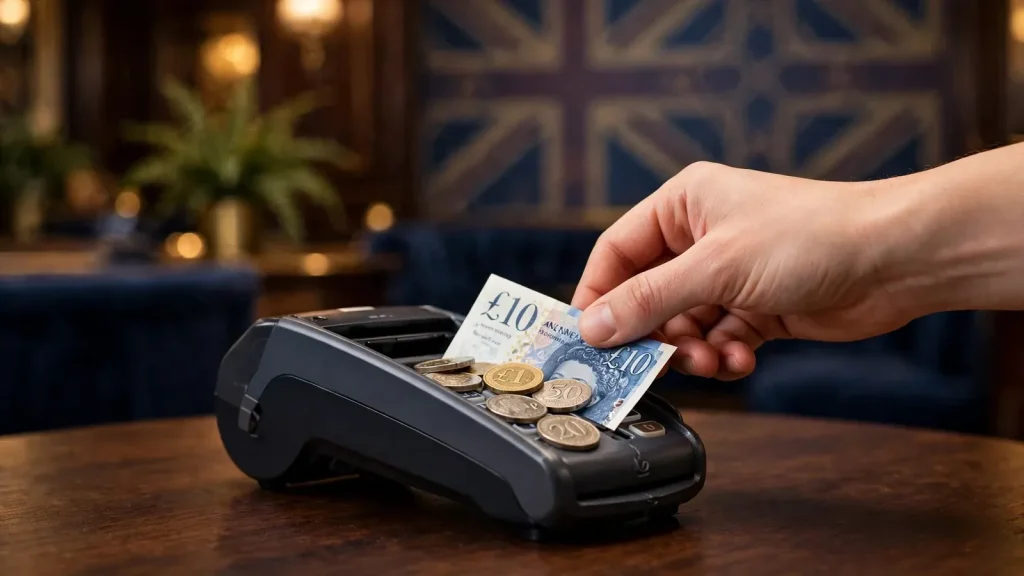
A £10 cashier floor is separate from bonus eligibility, and minimums can vary by payment route and operator.
What a £10 Minimum Deposit Actually Means
A £10 minimum deposit is a rule about the smallest payment the casino’s cashier will accept for a particular account or transaction. It does not mean that every UK casino requires you to deposit £10, nor does it tell you how much you must pay to qualify for a welcome offer. These are separate conditions, even when they happen to use the same amount.
Think of the cashier minimum as a threshold applied when you try to add money. If it is £10, a smaller payment will not meet that threshold; the cashier may reject it or require you to change the amount. Once a deposit is accepted, it is added to your account balance. The rule describes the transaction, not what you must spend, how long you can play, or whether a promotion will be activated.
The amount can vary between operators. A specialist review of UK casinos that accept direct banking reports a £10 minimum as typical for that payment route, while also identifying operators with £5 or £20 thresholds. That is a reported snapshot, not a universal rule: a £10 minimum deposit casino is one possible arrangement, not a standard imposed across the market. Some UK casinos accept deposits as low as £1, so £10 is not the lowest amount available everywhere either.
When you’re choosing a UK casino with a £10 minimum deposit in 2026, check the details that matter to you before depositing. The information available here focuses on payout speed, so use it as one point of reference.
-
SlotoSport
- Payout speed
- 1-3 business days
SlotoSport lists a payout speed of 1–3 business days. If payout timing matters to you, this is the stated timeframe to consider.
-
SpinFormula
- Payout speed
- 1-3 business days
SpinFormula lists a payout speed of 1–3 business days. You can use that stated timeframe when considering how quickly you may receive a payout.
-
Chanze
- Payout speed
- 1-3 business days
Chanze lists a payout speed of 1–3 business days. If you’re weighing payout timing, this is the available detail.
-
NightLuck
- Payout speed
- 1-3 business days
NightLuck lists a payout speed of 1–3 business days. This gives you a stated timeframe to consider for payouts.
-
Zombillion
- Payout speed
- 1-3 business days
Zombillion lists a payout speed of 1–3 business days. If payout speed is important to you, this is the information provided.
-
NightWin
- Payout speed
- 1-3 business days
NightWin lists a payout speed of 1–3 business days. You can factor this stated timeframe into your decision.
-
Revery Play
- Payout speed
- 1-3 business days
Revery Play lists a payout speed of 1–3 business days. That is the available detail if you’re considering payout timing.
-
Jetsetspins
- Payout speed
- 1-3 business days
Jetsetspins lists a payout speed of 1–3 business days. If you’re checking how long payouts may take, this is its stated timeframe.
-
EvoSpin
- Payout speed
- 1-3 business days
EvoSpin lists a payout speed of 1–3 business days. You can take this stated timeframe into account when reviewing your options.
-
Britsino
- Payout speed
- 1-3 business days
Britsino lists a payout speed of 1–3 business days. This is the available information to consider if payout timing matters to you.
Two thresholds, two different decisions
A cashier minimum answers: “Will the operator accept this payment?” A promotion’s qualifying deposit answers: “Does this payment meet the offer’s entry conditions?” You can therefore make a deposit that is accepted but does not qualify for an offer. Conversely, an offer may specify a qualifying amount that is higher than the cashier’s minimum.
A specialist review reports welcome-offer deposit requirements of £5 to £10. That range describes the entry conditions reported for offers; it does not mean that every offer uses the same threshold. If a casino accepts a smaller payment than an offer requires, the payment can still fund your account while leaving the promotion inactive. If the cashier minimum itself is higher than the offer’s stated threshold, the cashier rule determines the smallest payment you can make.
The figures should be checked in the right place. The cashier displays the amount it will accept, while the promotion’s terms set its own qualifying conditions. Do not infer one from the other. A headline that describes a £10 minimum deposit casino may refer to the cashier floor, an offer’s minimum qualifying amount, or both. Only the operator’s separate account and promotion terms establish which meaning applies.
What £10 tells you—and what it does not
The stated minimum is useful when you are deciding whether you can open an account with the amount you have set aside. It tells you the payment threshold presented for that operator under the conditions shown. It does not, on its own, establish that £10 is the best amount to deposit or that depositing it will provide a particular benefit.

Nor does the number describe the whole cost of taking part. A deposit is money transferred into the account; it is not automatically a bonus, a guaranteed return, or a measure of how much you will ultimately spend. Your available balance can change when you place bets, and promotional rules can treat bonus funds differently from deposited money. The cashier minimum cannot tell you those details.
Before depositing, read the amount displayed at the cashier and the terms attached to any offer you intend to claim. If you are not claiming an offer, its qualifying threshold is not a reason to deposit more. If you are, confirm that your planned payment meets the stated condition and that you have opted into the offer where required. These checks prevent the common mistake of treating an accepted payment as proof that a promotion has been activated.
A £10 deposit is not a recommendation. UK players must be at least 18, and operators must verify age before allowing a deposit. A UK-licensed operator must also prompt new customers to set a financial limit before their first deposit and provide account-level limit controls. Set a limit you can afford before using the cashier, then treat it as a boundary rather than an amount you need to reach.
Do
- Check the cashier for the accepted payment amount
- Read the promotion terms for qualifying conditions
- Set a financial limit before depositing
Don't
- Infer the offer threshold from the cashier minimum
- Treat an accepted payment as proof of a bonus
- Use a deposit amount as a spending recommendation
In practice, the phrase “£10 minimum deposit” is only precise when you know which threshold it describes. For the cashier, it is the smallest accepted payment under the stated conditions. For an offer, it is the amount required to satisfy that promotion’s entry terms. Those amounts may match, but one does not establish the other.
Depositing Online: Payment Routes and Their Limits
A cashier minimum is attached to the operator’s payment setup, not to whether you open the casino on a phone or a computer. A mobile casino account uses the same cashier system as the desktop version, so changing devices does not, by itself, change the minimum shown for a payment route. What matters is which methods the operator accepts and the conditions attached to each one.
For UK gambling accounts, the permitted funding routes include debit cards, e-wallets funded by debit and bank accounts. The UK Gambling Commission’s 2020 ban on credit-card gambling means you cannot use a credit card to fund casino play. That restriction also covers credit-card money routed through a money service business. A wallet must not be used for gambling if it allows credit-card funds to be spent on the transaction. The important distinction is the source of the money, not merely the name of the payment button in the cashier.
Visa and Mastercard debit cards are accepted at almost all UK casinos and can support low cashier minimums. That does not mean every operator sets the same minimum for every card, or that a particular deposit will be accepted regardless of the account or transaction checks. The figure presented beside the selected method in the cashier is the relevant amount for that attempt. If the amount you enter falls below it, the deposit will not meet that route’s stated minimum.

At a given UK operator, the cashier minimum is generally the same across payment methods. There are exceptions: an operator may set a higher minimum for direct banking than for a card or e-wallet. So a casino displaying a £10 minimum on one route may not necessarily require the same amount through every other route. Conversely, seeing a lower threshold beside one option does not establish that the same threshold applies to another.
This difference is a payment-route rule, not a difference between mobile and desktop play. If you compare the cashier on a phone with the cashier on a computer, check that you have selected the same method and are looking at the same account conditions. A £10 minimum deposit online is therefore not a universal technical requirement for UK casinos. It is the amount required by a particular operator for the route you choose, where that is the figure shown.
Direct banking transfers funds from your bank account rather than from a card or a debit-funded wallet. The method can have its own cashier threshold, and some operators set that threshold higher than the one shown for cards or e-wallets. Do not assume that a direct banking option will accept the same small amount as a debit card merely because both ultimately draw on a bank account. The cashier’s method-specific terms determine what it will accept.
The same principle applies when you are comparing casinos that advertise a £10 minimum. That figure is useful only when you know which deposit method it describes. A site may set £10 as its cashier floor across its available routes, while another may show a different floor for direct banking. Read the amount beside the method you intend to use; a general statement about the casino may not tell you whether the selected route has a separate threshold.
Before reaching the payment screen, a UK-licensed operator must verify your age before allowing you to deposit. New customers must also be prompted to set a financial limit before their first deposit, with account-level limit controls available. These checks form part of the account process; they do not change which payment methods are permitted or what minimum the cashier applies.
When you are ready to fund the account, follow the cashier’s sequence: select an accepted route, confirm its displayed minimum, enter an amount that meets that requirement, and complete the payment using eligible funds. If the deposit is declined or the amount is rejected, check the selected route and its conditions rather than assuming that all methods share one threshold. This is particularly relevant when a £10 deposit works through a card but not through direct banking, or when the cashier shows a higher requirement for the latter.
The payment method does not turn a credit-card deposit into an allowed one simply because it is processed through another service. Use a debit card, a bank account or an e-wallet funded by debit, and make sure the wallet does not permit credit-card funds to be used for gambling. Once you have selected a compliant route, the cashier’s displayed minimum tells you the amount that route requires at that operator.

How to Judge a New Casino Without a Best-of List
“New” can describe an operator that has recently entered the market, a site that has changed its offer, or simply a casino newly found by a player. The label does not establish that the site is better, that its cashier minimum is lower, or that it has a sign-up bonus. Those are separate features, so assess them separately rather than treating one as evidence of the others.
Start with the cashier minimum: the smallest amount the operator will accept through the payment route you intend to use. Then check the promotion terms independently. A casino can accept a £10 deposit without offering a sign-up bonus; another can have a bonus whose qualifying deposit conditions differ from its cashier floor. If you combine those checks into a single idea of “best”, you can mistake a usable deposit threshold for a promotional benefit.
The distinction is visible in examples recorded by a specialist review. It described Zodiac, Luxury Casino and UK Casino Club as having a £10 minimum on UK accounts and no sign-up bonus. That illustrates a specific combination: the cashier accepts the stated amount, but a new-customer offer is not part of the package. It does not establish that the casinos are newly launched, nor does it show that every operator with the same minimum follows the same policy.
Zodiac
£10 minimum on UK accounts and no sign-up bonus.
Luxury Casino
£10 minimum on UK accounts and no sign-up bonus.
UK Casino Club
£10 minimum on UK accounts and no sign-up bonus.
NetBet
Listed as having a £1 cashier minimum.
The same review identified NetBet as the only UKGC-listed casino on its list with a £1 cashier minimum. That is a claim about the entries in that review, not a permanent market-wide ranking. It also answers a different question from whether a casino accepts a £10 deposit: a lower cashier floor does not, by itself, make an operator more suitable for someone planning to deposit £10. The relevant comparison is whether the cashier accepts your chosen amount and whether the site’s terms match what you want to do.
To compare options, separate the checks into three parts:
- Cashier access: Confirm the minimum shown for your account and intended payment route. Do not assume a label in a review overrides the live cashier.
- Promotion status: Look for an explicit sign-up offer and read its qualifying conditions. “No sign-up bonus” is not the same as a bonus that requires a different deposit.
- Operator status: A legal online casino serving Great Britain must hold the relevant UK Gambling Commission operating licence. A low minimum or an appealing promotion does not establish that status.
This approach also helps with claims that a casino is “better”. Better has no single technical meaning. One player may prioritise a particular cashier minimum; another may care whether a welcome offer exists. Unless the comparison states which feature it measures, a ranking can hide unlike things behind one label.
Treat “new” as a prompt to verify details, not as a quality signal. Offers and cashier terms can change, while a review may describe only the conditions it checked. Before registering, compare the operator’s current account and promotion terms with the specific detail that matters to you. If the terms do not clearly distinguish the deposit minimum from the offer’s qualifying deposit, do not assume that meeting one automatically meets the other.
Not on GamStop: What the Deposit Amount Does—and Does Not—Tell You
A £10 cashier minimum tells you the smallest amount an operator will accept through a particular cashier. It does not tell you whether the casino participates in GamStop, holds a UK Gambling Commission licence, or applies any particular safer-gambling controls. The same deposit threshold can appear on sites with different regulatory arrangements.

GamStop is a self-exclusion service, not a deposit category. A search for a £10 minimum deposit casino not on GamStop may therefore bring together sites that share a payment threshold but differ in who regulates them and what protections apply. The amount alone cannot establish which situation you are looking at.
For a casino legally serving customers in Great Britain, the operator must hold the relevant UK Gambling Commission licence. Check the operator against the Commission’s register rather than treating a cashier screen, promotional wording or payment option as proof of licensing. A site outside the UKGC system is not a UK-licensed casino, even if it accepts customers in Britain or displays prices in pounds. Offshore sites can be accessible, but that does not make them regulated for the British market.
GamStop status and licensing are related questions, but they are not interchangeable. A claim that a casino is “not on GamStop” does not establish that it is legitimate, safe, or authorised to serve UK customers. Conversely, a £10 minimum does not show that a site is outside the scheme. Check the operator’s regulatory status separately, and read its account and safer-gambling information to understand what controls it provides. If you have self-excluded through GamStop, do not use a site’s deposit threshold as a way to decide whether it is appropriate to play.
The same distinction applies if you are looking for a mobile casino that accepts payment by SMS. A payment route, including pay-by-SMS, describes how a transaction is made; it does not identify the operator’s licence or GamStop position. Do not infer either status from the availability of a mobile payment method or from an advertised £10 minimum.
Before depositing, confirm that you are at least 18, identify the company operating the casino, and check its licence through the UK Gambling Commission. Then assess the protections that matter to you, including self-exclusion information and account-level controls. These checks answer different questions from the cashier minimum: one concerns the amount accepted, while the others concern whether the operator is authorised and how it handles player safeguards.
Using a £10 Deposit on Online Slots
A £10 balance does not translate into a fixed number of spins. The key variable is the stake selected for each spin: the same balance lasts longer at a smaller bet, while a larger bet uses it more quickly. Many slots accept stakes of £0.10 to £0.20 per spin, so a £10 balance would cover 100 spins at the lower stake or 50 at the higher one if every spin returned nothing and the stake stayed unchanged.
Those figures are a simple budget calculation, not a prediction of how long a session will last. A winning spin can add money to the balance; a losing spin reduces it by the amount staked. If you change the stake during play, the number of spins the remaining balance can cover changes too. For instance, after several spins at one stake, choosing a higher one means each further spin consumes more of what remains.

The slot’s displayed stake is the amount committed to a spin, but check how the game presents it before pressing play. Some interfaces let you adjust the stake in steps, and the selected value may not be the smallest option available in every game. The cashier’s £10 figure describes the amount you put into the account; it does not mean that each slot requires a £10 bet or that the whole balance must be staked at once.
There are also legal limits on online slot stakes in Britain. For customers aged 18 to 24, the maximum is £2 per game cycle; for customers aged 25 and over, it is £5. These are ceilings, not recommended stakes. A smaller bet can make a balance last across more spins, but it cannot remove the risk that the balance will fall to zero.
Online slot spins must last at least 2.5 seconds, and autoplay is banned in Britain. You therefore cannot use an automatic spin setting to run through the balance; each spin requires your attention. Before depositing, set a financial limit that you can afford to lose. Operators must verify your age before allowing deposits, and online gambling is for adults aged 18 and over at UK Gambling Commission-licensed sites.
If your aim is to see how a slot behaves rather than to prolong a session, decide the stake before starting and avoid raising it to recover losses. A £10 deposit gives you a starting balance, not a guaranteed number of spins or a guaranteed return.
Budget Calculation
-
1
Determine Balance
Start with a £10 deposit into your account.
-
2
Select Stake
Choose a stake, for example, £0.10 or £0.20 per spin.
-
3
Calculate Spins
At £0.10 per spin, the balance covers 100 spins; at £0.20, it covers 50 spins (assuming no returns).
Bonus Eligibility and Wagering on a £10 Deposit
A cashier accepting a £10 deposit does not automatically mean that deposit qualifies for a welcome offer. The promotion has its own eligibility rules: it may specify a minimum qualifying deposit, require you to opt in, or exclude particular circumstances. Read those terms before paying in, and confirm that the offer is available to you.
A specialist review has reported bonuses with a £10 qualifying-deposit requirement at casinos whose cashier also accepts £5. In that case, a £5 payment can reach your account without triggering the promotion; the cashier floor and the offer threshold are separate conditions. If you deposit £10, check whether the offer requires that exact amount or whether it sets another qualifying rule. Do not assume that every deposit receives a bonus.
A no-deposit bonus is different in kind: it is not unlocked by making a £10 payment. Its eligibility and conditions are set by the offer, so a deposit should not be treated as proof that you qualify. Check the promotion wording to establish whether a deposit is required before you accept it.
When a deposit does qualify, distinguish the cash you paid from any bonus funds credited alongside it. Wagering rules apply to the bonus amount, not to the payment method used to make the deposit. The terms should identify which balance is promotional, what play counts towards wagering, which games are eligible and whether a maximum withdrawal condition applies. Those details affect whether bonus funds can be converted into withdrawable winnings; the deposit itself is not the same thing as the bonus.
For promotions offered from 19 January 2026, the UK Gambling Commission’s cap means wagering requirements cannot exceed 10x the bonus funds. For instance, if an offer grants bonus funds, the required wagering is calculated against that bonus amount, subject to the stated conditions. Older descriptions of higher requirements should not be read as the current permitted cap.

Before depositing, set a financial limit and decide whether the promotion’s conditions fit within it. A bonus can add play conditions without increasing the amount you intended to spend, so avoid depositing more simply to reach an offer threshold. UK-licensed operators must verify your age before allowing a deposit; online gambling is for adults aged 18 or over.
When a £10 Minimum Is the Casino’s Actual Cashier Floor
If a casino’s cashier floor is £10, the deposit form will not accept a smaller amount through the route you have selected. That is an operator setting, not a UK-wide rule. A specialist casino review describes £10 as a common minimum for operators accepting direct banking, while recording examples of £5 and £20 floors. Treat those figures as reported operator settings, not a guarantee that every casino or payment route will offer them.
The practical effect is straightforward: you need enough available funds to meet the cashier’s stated minimum before the deposit can be submitted. A balance below that amount does not become a valid deposit merely because the account is open. The amount should be visible before you confirm the transaction; if the cashier lists different options, use the minimum attached to the option you intend to use.
A £10 floor also does not describe what happens after you play. Depositing adds funds to the account, while withdrawing returns eligible funds to you. Those are separate transactions, and the operator can set a different minimum for each. A specialist review reports withdrawal thresholds of £10 to £20 at many UK casinos, but that is a review’s snapshot, not a fixed market rule. Check the operator’s own withdrawal terms rather than assuming that a £10 deposit can be withdrawn in full as soon as it reaches the account.
This distinction matters even if you plan to deposit only once. If the withdrawal minimum is higher than the amount you later want to cash out, you may need to leave the balance in the account until it meets the stated threshold. Conversely, a lower withdrawal minimum would not reduce the cashier floor for a new deposit. Neither figure determines the other.
Before funding the account, check the cashier amount and the withdrawal terms, then set a financial limit that you can afford before your first deposit. The operator must verify your age before allowing a deposit, and you must be at least 18 to gamble online in the UK. Use a permitted payment source: UK-licensed casinos cannot accept credit cards for gambling. These checks are separate from the £10 setting; meeting the cashier minimum does not override them.
Checking Whether a £10 Deposit Site Is Verifiable
A £10 cashier minimum tells you what an operator says it will accept; it does not establish that the casino is safe or legally available to you. To assess a site, verify its operator and licence rather than relying on a deposit figure or a “trusted” label.
For customers in Great Britain, a remote operator offering real-money gambling must hold the relevant UK Gambling Commission licence. Search the Commission’s register for the operator’s legal name and check that the licence is current and covers the gambling activity being offered. A brand name on a page is not, by itself, proof of who operates the casino. If the operator details on the site do not match the register, treat that as a reason to pause rather than infer that the licence belongs to the brand.

There is a narrow piece of low-deposit evidence: a specialist review reported verifying six UKGC-licensed casinos that accepted genuine £1 deposits. That is a finding from one review, not a complete or enduring count of UK casinos, and it does not establish that any particular £10 deposit site is trustworthy. Operators and cashier conditions can change, so confirm the current details directly before opening an account.
Check what happens before you can deposit, too. A UK-licensed operator must verify your age before allowing deposits; online gambling is for adults aged 18 and over. New customers must also be prompted to set a financial limit before their first deposit, with account-level controls available afterwards. These are concrete account safeguards, not proof that a particular site will suit you, but their absence is a reason to stop and verify the operator’s status.
A regulated casino must provide an internal complaints process and access to an approved Alternative Dispute Resolution service. Find the complaints route and the named ADR provider in the site’s terms or help pages before you pay in. If those details are unclear, or the operator cannot be matched to a current licence, do not treat the £10 threshold as reassurance. The useful test is whether the legal operator, licence, age checks and customer-protection routes can all be checked independently.
- Check the UK Gambling Commission register for the legal operator name
- Confirm the licence is current and covers the activity
- Verify that age checks are required before depositing
- Locate the internal complaints process and ADR provider
- Ensure a financial limit prompt is provided for new customers
Playing for Real Money: Balance and Withdrawal Thresholds
A £10 deposit becomes real-money balance when the casino accepts the payment and credits it to your account. That balance is then available for eligible play; it is not a promise that you can withdraw the same amount later. Bets reduce the balance when placed, while returns from play can add to it. The amount remaining at any point is therefore determined by transactions on the account, not by the original deposit figure.
The cashier minimum and the withdrawal minimum are separate rules. The first controls how much you must pay in to fund the account. The second controls the smallest amount the operator will process as a payout. A casino can accept a deposit below its withdrawal threshold, so a small balance may be playable but not immediately payable as a withdrawal. You may need to keep playing, add funds, or wait until the balance meets the stated payout floor; check the operator’s terms rather than assuming the two thresholds match.

A specialist casino review reports withdrawal minimums from £1 to £5 for some operators. Treat that as a report about the operators it covered, not as a fixed rule for UK casinos. The cashier’s own withdrawal page and account terms are the relevant places to confirm the current amount and any conditions attached to a payout.
Payment capability does not settle the question. Debit cards and some e-wallets can support £1 transactions, but a payment method’s ability to move a small amount does not require the casino to permit a withdrawal of the same size. The operator sets its payout process separately.
Before depositing, confirm that the site is licensed for the British market, that your age has been verified, and that you have set a financial limit. Then check both the deposit and withdrawal rules. A £10 real-money deposit can provide a playable starting balance, but only the withdrawal terms tell you when a remaining balance can leave the account.

PayPal and the £10 Cashier Minimum
A £10 minimum deposit does not automatically change when you select PayPal. At a given UK operator, the cashier minimum is generally shared across payment methods, so a £10 floor may apply to PayPal as well as to cards. However, the operator can set different thresholds for particular routes. The amount displayed after you choose PayPal is the relevant minimum for that transaction.
Check the cashier before confirming a deposit: look for the minimum shown beside PayPal, rather than assuming that the figure listed for another method applies. If the cashier will not accept the amount you entered, the method-specific floor may be higher. A specialist review has reported flat transaction fees of £1 to £3 from some payment providers. That is not a universal PayPal charge; check the fee information shown by the provider and operator before proceeding.
The deposit amount and the available PayPal balance are separate constraints. You need an eligible source of funds in the wallet, and the cashier must accept PayPal for your account. UK gambling deposits cannot be made with a credit card, including credit-card funds routed through a money service. A wallet used for gambling must not allow credit-card funds to be used for the payment. Use an eligible debit-funded wallet or another permitted source.

If PayPal is not available, or its displayed minimum exceeds the amount you intended to deposit, do not assume that changing the deposit amount will alter the operator’s rules. You can check another method’s cashier terms, but its minimum may differ. Before depositing, set a financial limit for your gambling account and confirm that the amount is within it. UK operators must verify your age before allowing a deposit; you must be at least eighteen to gamble legally online with a UK-licensed operator.
The key check is the PayPal row in the cashier: it tells you whether the method is available and what minimum applies to that payment. A site-wide £10 figure is a useful indication, not a substitute for checking the selected route.
What is the smallest deposit I can make at these casinos?
The lowest deposit available at some UK casinos is £1, although it is rare and may be limited to particular payment methods. Check the cashier for the minimum shown for your chosen method.
Which payment methods usually accept £1 deposits?
Debit cards and some e-wallets can support £1 deposits. Boku and Payforit mobile billing are also cited among the payment methods associated with the £1 deposit tier.
Can players claim a bonus with a small deposit?
Yes, if your deposit meets the offer’s minimum qualifying amount and you meet its other conditions. A £1 deposit typically will not activate a welcome offer, which commonly requires £5 to £10.
Casino Types: Deposits, Apps and Payment Methods
Content created by the «goodthingsshare» team