
Know what a £2 deposit does—and what it doesn’t
 Available in US

A guide to cashier limits, payment methods, mobile play, bonus terms and how small balances interact with game stakes.
What a £2 Minimum Deposit Actually Means
A £2 minimum deposit is the smallest amount the cashier will accept when you fund an account. It sets an entry threshold for putting money into the account; it does not set a minimum stake, a required amount of play or the amount you must later withdraw. Those are separate conditions, and the cashier minimum alone does not tell you what they are.
The distinction matters because “minimum deposit” can sound like a rule about how much you need in order to use a casino. In practice, it describes one specific point: the minimum payment the operator will accept as a deposit. If that threshold is £2, an attempted deposit below it will not meet the stated requirement. A deposit at that level meets the threshold, but it does not mean you must use the entire balance in one go, or that you are required to keep depositing.
Nor does the figure establish the smallest possible bet. A casino’s cashier rules and a game’s staking rules are different. The deposit minimum tells you what can be added to your account; the available stakes determine what can be wagered once funds are there. A £2 cashier minimum therefore does not, by itself, tell you how many plays a balance might cover or what each play costs.
If you’re looking for a UK casino with a £2 minimum deposit, check each site’s current deposit terms before signing up. The payout details below offer one point of reference as you consider your options.
-
SlotoSport
- Payout speed
- 1-3 business days
SlotoSport lists a payout speed of 1–3 business days. Check its deposit terms to see whether it suits your £2 minimum-deposit search.
-
SpinFormula
- Payout speed
- 1-3 business days
SpinFormula lists a payout speed of 1–3 business days. You’ll need to check its deposit terms for details relevant to a £2 minimum deposit.
-
Chanze
- Payout speed
- 1-3 business days
Chanze lists a payout speed of 1–3 business days. Confirm its deposit terms directly if a £2 minimum deposit is important to you.
-
NightLuck
- Payout speed
- 1-3 business days
NightLuck lists a payout speed of 1–3 business days. Check its deposit terms to confirm whether it fits your search for a £2 minimum deposit.
-
Zombillion
- Payout speed
- 1-3 business days
Zombillion lists a payout speed of 1–3 business days. Its deposit terms are worth checking if you’re looking for a £2 minimum deposit.
-
NightWin
- Payout speed
- 1-3 business days
NightWin lists a payout speed of 1–3 business days. Check directly whether its deposit terms meet your £2 minimum-deposit requirement.
-
Revery Play
- Payout speed
- 1-3 business days
Revery Play lists a payout speed of 1–3 business days. Review its deposit terms to see whether it matches what you’re looking for.
-
Jetsetspins
- Payout speed
- 1-3 business days
Jetsetspins lists a payout speed of 1–3 business days. If you’re seeking a £2 minimum deposit, verify its deposit terms before signing up.
-
EvoSpin
- Payout speed
- 1-3 business days
EvoSpin lists a payout speed of 1–3 business days. Check its deposit terms to find out whether a £2 minimum deposit is available.
-
Britsino
- Payout speed
- 1-3 business days
Britsino lists a payout speed of 1–3 business days. Confirm its deposit terms directly if you want to deposit as little as £2.
It is also not a withdrawal promise. Depositing money and requesting a withdrawal are different transactions, and the operator may set separate minimum amounts for them. A balance can meet the deposit threshold without meeting the withdrawal threshold. That difference can matter when you are deciding whether a small initial payment makes sense: the amount you can put in may be lower than the amount you can later request to take out.
Some UK casinos accept deposits starting at £1, so a £2 threshold is not the lowest available. The comparison is about the cashier’s entry point only. It does not show that a £1 option is necessarily available through every payment method, or that a casino accepting £1 will also allow a £1 withdrawal. Each condition needs to be understood on its own rather than inferred from the headline minimum.
Withdrawal figures also need careful interpretation. A specialist casino review has reported minimum withdrawal thresholds of £10 to £20 at many UK casinos. Treat that as a figure reported by that type of source, not as a fixed rule for every operator or as a guarantee about the current terms of a particular account. The relevant withdrawal condition is the one stated by the operator. It can be higher than the amount needed to make a deposit, which is why “minimum deposit” and “minimum withdrawal” should not be treated as interchangeable labels.

Consider what the numbers mean in combination. If a cashier accepts a £2 deposit but the stated withdrawal minimum is higher, depositing £2 does not mean that £2 can immediately be requested as a withdrawal. The amount in the account and the amount eligible to be withdrawn are not necessarily governed by the same threshold. A minimum-deposit figure describes the way into the account; it does not describe every rule that applies after money has been added.
This is why the phrase “£2 minimum deposit casino” needs a narrow reading. It identifies an operator whose cashier accepts a deposit at that level. It does not establish that the casino is inexpensive to play, that every game can be used with that balance, or that winnings can be withdrawn without meeting additional conditions. Those questions are separate from the deposit floor.
The same distinction applies when comparing a £2 minimum with a £1 minimum. The lower figure means less is needed to make a qualifying deposit, but it does not automatically make the account more suitable for every player. Conversely, a £2 minimum does not mean that you must deposit more than £2. The threshold is a boundary for the transaction, not a recommendation about how much to spend.
Read the amount as one condition among several, and keep its scope precise: it tells you the minimum accepted to fund the account. It says nothing by itself about the minimum stake, the amount required for a withdrawal, or whether the balance will be enough for the games you want to play.
How to Judge Whether a Low-Deposit Casino Suits You
A £2 cashier minimum is useful only if it fits the way you intend to fund and use the account. Treat it as one condition to verify, not as a complete measure of value or suitability. Before registering, compare the cashier’s stated minimum with the rules for the payment method you would use, the withdrawal conditions, and any promotion you might want. Each can have a separate threshold.
Confirm the cashier minimum
Look for the minimum deposit in the operator’s own terms or cashier information, and check that it applies to the account and payment route available to you. A headline stating that a casino accepts a £2 deposit may not mean every method can be used at that level. Some operators set a higher minimum for particular payment methods, or impose other limits that make the advertised threshold irrelevant to your preferred option.
Be precise about what the figure refers to. You are looking for the smallest amount the cashier will accept for your account, not a promise that every transaction will be accepted at that amount or that the same threshold applies when you withdraw. If the rules are unclear, treat that uncertainty as part of your assessment rather than assuming the most favourable interpretation.
A low minimum can also be less important than the next amount you would realistically choose to deposit. If you would not use the site unless a particular payment route were available, check that route’s own terms before deciding that the casino is a match.
Check payment limits separately
The minimum is only one end of a payment method’s limits. Check whether the method you prefer is available for deposits, whether it has its own transaction restrictions, and whether the operator’s terms distinguish it from other methods. The relevant question is not simply whether the casino accepts a small deposit, but whether it accepts one through a route you can use.

For a £2 minimum deposit casino in the UK, compare the cashier information with the payment terms rather than relying on a short promotional description. A site may advertise a low entry point while setting a different minimum for one method. This does not necessarily make the site unsuitable; it means the figure must be considered alongside the method you actually plan to use.
Look at withdrawals before depositing
Deposit and withdrawal rules are separate. Find the minimum withdrawal amount and any conditions attached to it before deciding that a small starting balance will suit you. If the withdrawal threshold is higher than the amount you deposit, you may need to build a larger balance before you can request a withdrawal. That outcome depends on the operator’s rules and what happens in play; it is not a reason to assume that a deposit can be withdrawn immediately.
Also check whether withdrawal conditions differ by method and whether the casino explains how it handles a balance below its stated threshold. A clear rule lets you judge the practical effect of a small deposit. If you cannot find the rule, do not treat the cashier minimum as evidence that withdrawals work on the same basis.
Separate account access from promotion eligibility
A casino may accept a deposit without counting it towards a welcome offer. Check the offer’s qualifying deposit amount and any payment-method exclusions before including a promotion in your decision. A £2 deposit that funds an account can still fail to qualify for a promotion if the offer sets a higher entry condition.
Do
- Verify the cashier minimum in the operator's own terms
- Check withdrawal conditions before depositing
- Confirm if your payment method supports the low threshold
Don't
- Assume a low deposit minimum guarantees a welcome bonus
- Treat the deposit floor as a recommendation of how much to spend
- Assume every payment method has the same minimum entry point
This distinction matters when comparing low-deposit options: decide whether you want access to the games with your own balance, or whether promotion eligibility is part of what would make the site suitable. Do not assume that a low cashier minimum guarantees a welcome offer. The promotion’s own terms determine eligibility, and those terms can be different from the general deposit rules.
Assess legitimacy, not just the headline
For a casino serving customers in Great Britain, check that it holds a current operating licence from the UK Gambling Commission. A low entry threshold alone does not establish that an operator is legitimate or suitable. The operator should also provide account terms and routes for complaints, including access to an approved Alternative Dispute Resolution service.
Numbers about the smallest deposits accepted by individual casinos can change. A specialist review reported verifying six UK Gambling Commission-licensed casinos with a genuine £1 cashier minimum, but that is a time-specific finding, not a permanent market count or a guarantee that the same terms remain available. The useful point is that lower thresholds can exist; you still need to confirm the current cashier rules directly.
In practice, a suitable option is one whose stated minimum matches your intended deposit, whose payment and withdrawal conditions are clear, and whose promotion rules do not rely on assumptions. If any of those checks produces a mismatch, the advertised £2 entry point may not be the feature that matters most to you.

How Online Casino Deposits Work
A deposit moves money from an approved payment source into your casino account. The cashier sets the amount you can submit, while the payment provider and your bank handle the transaction itself. Once it is accepted and recorded by the operator, the funds appear in your account balance. A £2 cashier minimum therefore describes the smallest deposit the site will accept; it does not mean every payment route will process that amount.
Start by signing in and opening the cashier or deposit area. The available payment methods are shown there, along with the amount fields and any minimums that apply. Choose a method, enter an amount that meets its stated threshold, and follow the payment instructions. Those instructions depend on the route: a card payment uses card details, while direct banking takes you through the relevant bank-payment steps. E-wallets use a wallet account, which must be funded in a way permitted for gambling.
Before confirming, check that the payment source is a debit card, a bank account, or an e-wallet funded by debit. The UK’s credit-card gambling ban, introduced in 2020, means a credit card cannot be used to fund casino play. This restriction also matters when money passes through another service: a payment route does not make credit-card gambling acceptable simply because the card is not entered directly into the casino cashier.
The amount field is not the only control involved. The casino checks whether the amount meets its cashier minimum for the selected method, and the payment provider or bank may apply its own checks. If the amount is below the displayed threshold, the deposit may not be submitted successfully. If it meets the threshold but the payment is declined or cannot be authorised, the casino balance will not be funded. Follow the status shown in the cashier rather than assuming that entering an amount has completed the transaction.
How to Deposit
-
1
Select your method
Open the cashier and choose a payment route, such as a debit card or e-wallet.
-
2
Enter the amount
Input a figure that meets both the casino's cashier minimum and the payment provider's limits.
-
3
Confirm the transaction
Follow the payment instructions and wait for the status to show as completed before checking your balance.
Once the payment is accepted, the operator records it against your account and updates the balance. If the funds do not appear, check the transaction status before trying again. A pending or failed payment is different from a completed deposit, and repeating the instruction without checking could lead to an unintended second attempt. If the cashier does not explain the status, contact the operator through its support route and provide the transaction details it requests.
A site may display one general minimum, but that figure does not always describe every payment method. At many operators the threshold is shared across the cashier, so changing from a card to an e-wallet does not change the minimum. Some casinos instead set a higher entry amount for direct banking than for card or wallet deposits. In that case, a £2 minimum shown for one route should not be assumed to apply to another. Select the method first, then read the amount requirement shown for that route before submitting.
Direct banking illustrates why the method-specific figure matters. A specialist review reports a £10 minimum as typical for UK casino deposits made this way, while also recording operators that set the threshold at £5 or £20. These are reported examples rather than a rule for every casino. The cashier is the relevant place to confirm the current amount for the account and method you intend to use.

A £2 minimum deposit can therefore be a real cashier threshold without being available through every route at that operator. If the site accepts £2 by card but requires more for direct banking, the difference lies in the method’s terms, not in the value of the account balance. The same principle applies when a general minimum is displayed before you select a payment option: treat it as an initial indication and verify the specific route.
The amount you type is the amount you are asking the cashier to transfer, not a promise that every part of the process has completed. Keep the confirmation screen or transaction reference until the balance updates. If the displayed requirement, payment status and account balance do not agree, pause and resolve that mismatch with the operator rather than making another deposit to compensate.
Playing for Real Money on Mobile
A mobile casino uses the same account balance as its desktop version. Once a deposit is credited, the funds appear in your account and can be used for real-money games on a compatible phone or tablet. The screen may be smaller, but the balance still changes according to the stakes you place and the outcomes of your play.
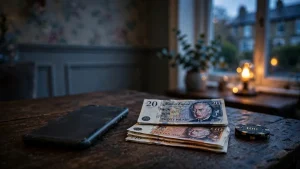
A £2 minimum deposit mobile casino sets a threshold for putting money into the account; it does not determine how much each game costs. Before you play, check that the displayed balance is real-money funds and that the game is using that balance. If a promotion is active, its terms may affect which balance is used first and how winnings are treated, so read the offer conditions rather than assuming every displayed pound is immediately withdrawable.
What a small balance can do
Your balance lasts for a number of plays, not a fixed amount of time. A lower stake removes less from the balance on each losing play, so it can allow more plays before the funds run out. A higher stake reduces that number. Wins can add funds back, while losses reduce the balance; the result of one play does not guarantee what will happen on the next.
Many slot games allow stakes in the range of 10p to 20p per spin. That gives you a way to compare the stake with a £2 starting balance, but it does not predict how long a session will last. The balance can fall quickly if you choose larger stakes or continue after losses, and a win may change it in the other direction. Set a stake that fits the amount you are prepared to lose, rather than treating a small deposit as a target that should be played through.
On mobile, the game interface can make it easy to move between stake settings and start another play. Check the selected stake before confirming each game action, especially after changing games or returning to a session. The balance shown on screen is a running total, not a spending limit: it does not stop you from depositing again. Decide in advance how much you are willing to spend and use the account’s financial-limit controls to keep deposits within that boundary.
Set a limit before funding the account
A UK-licensed casino must prompt a new customer to set a financial limit before the first deposit and provide account-level controls for managing limits. Set a limit that reflects what you can afford to lose, not an amount you expect to win back. If the deposit screen offers a choice of limit types, read what each one controls; a deposit limit, for instance, governs funding rather than the stake selected inside a game.

A small initial deposit can make it easier to keep the first session contained, but it is not a substitute for a limit. If you reach the amount you set, stop rather than adding funds to extend play. You can also leave the game and review your account settings before making another deposit. The limit is useful only if it is set before play and followed when your balance changes.
Age and account checks
You must be at least 18 to gamble online in the UK. A casino must verify your age before allowing you to deposit, so creating an account on a phone does not mean you can fund it immediately. Be prepared to complete the operator’s checks and provide any requested information through its account process. Do not try to deposit until the account is cleared to do so.
A real-money mobile session therefore depends on three separate things: a credited account balance, a stake you can afford, and an age-verified account with a limit set before funding. Keeping those separate makes it easier to see what the balance represents and to stop when you have reached your chosen spending boundary.
Bonus Eligibility and the Wagering Rules That Apply
A £2 cashier minimum tells you how little you can deposit to fund an account. It does not tell you whether that deposit qualifies for a welcome offer. These are separate conditions: the cashier sets the threshold for adding money, while the promotion’s terms define which deposits trigger a bonus and what you must do before bonus funds or related winnings can be withdrawn.
A casino may therefore accept a £2 deposit but set a higher qualifying deposit for its promotion. A specialist review reports that some offers require a qualifying deposit of £10 even where the cashier accepts £5. Treat that as a prompt to check the current offer terms, not as a rule that applies to every casino. Look for the minimum deposit specified for the particular promotion and confirm whether the payment method you intend to use is eligible.
The distinction matters when a deposit is small. If it falls below the promotion’s qualifying threshold, the money can still appear as cash in your account, but the offer may not activate. If you opt into an offer before depositing, check whether the qualifying condition applies to a single deposit or is described differently in the terms. Do not assume that being able to deposit a particular amount means you have met the bonus conditions.
A deposit bonus is not a no-deposit bonus
A deposit bonus is linked to a qualifying payment. A no-deposit bonus, by contrast, is presented without requiring a deposit to trigger it. The label alone does not establish who can claim it, whether you must register or opt in, or what restrictions apply to any bonus funds or winnings. Read the offer’s own terms before taking an action that could affect eligibility.
The same separation applies to searches for a £2 minimum deposit casino with a bonus: the low cashier threshold and the availability of a promotion are not interchangeable facts. Check each condition independently. If the terms set a higher qualifying deposit, depositing less may fund play but leave the promotional balance unchanged. If there is no promotion attached, a small deposit can still be made as a cash deposit, subject to the casino’s rules.

The wagering cap and other conditions
Since 19 January 2026, the UK Gambling Commission has limited wagering requirements on gambling incentives to 10 times the bonus funds. This cap concerns wagering of the bonus; it does not mean that every offer has identical terms or that wagering is the only condition. The offer must still explain how the bonus is credited, which games contribute, how winnings are treated and when bonus funds expire.
Check the wagering calculation carefully. A requirement expressed as a multiple of bonus funds is not necessarily calculated on your deposit as well. The terms should identify the amount used for the calculation and the balance to which the requirement applies. If that description is unclear, do not rely on a headline offer figure to infer how much play is required.
Other limits continue to shape bonus play. Under the market rules, bonus funds must expire within the permitted period of 7 to 30 days, and a bet made while wagering bonus funds must not exceed £5 per spin. A game restriction can also affect whether a wager counts, so a spin or other bet may not advance the requirement simply because it uses bonus funds. Read the eligible-game rules and the expiry condition before accepting the offer.
An offer’s maximum withdrawal cap can also limit what you receive from bonus play. That is distinct from the wagering requirement: completing the required wagering does not erase other terms. Check whether the cap applies to bonus-derived winnings and how the casino defines those winnings.
For any UK-facing casino, verify that the operator holds the required UK Gambling Commission licence. Offers described as being for casinos “not on GamStop” should not be treated as a substitute for checking that licence: UK operators serving British customers must be licensed, and a label does not establish regulatory status. Before you deposit or opt in, make sure the qualifying amount, wagering calculation, game restrictions, expiry and withdrawal conditions all match what you intend to accept.
Slots, Stakes and the Cost of Small Deposits
A £2 starting balance does not buy a fixed amount of play. It is the amount available to stake, and the pace at which it changes depends on the stake selected and the results of each spin. Many online slots accept stakes between £0.10 and £0.20 per spin, so the same balance can cover a different number of spins depending on your choice.
At £0.10 per spin, £2 covers 20 spins if none of them returns a win. At £0.20 per spin, it covers 10 losing spins. These are arithmetic illustrations, not promises about how long a session will last: a win can add funds to the balance, while a sequence of losses reduces it. The stake is taken from the balance for each spin, so repeated play at the higher amount uses the starting funds twice as quickly as play at the lower amount, before accounting for results.
This is why the displayed stake matters more than the game’s theme or animation when you are working with a small balance. A slot may offer several stake settings; check the amount for one spin before starting, rather than assuming that its lowest setting is selected. If the available minimum stake is above what you intend to spend, choose another game instead of treating the extra cost as negligible. On a £2 balance, even a small difference in the cost of each spin changes how many losing spins the funds can cover.

Wins do not make the balance predictable. A returned amount may be smaller or larger than the stake, and a run of spins can consume funds without restoring them. The calculation therefore helps you understand the exposure of each spin, not forecast a result. You can decide whether the stake fits your intended spend before playing, then stop when that amount has been used rather than increasing the stake to try to recover losses.
A small deposit can also make a slot’s pace relevant. In Britain, online slot autoplay is banned, so you cannot set the game to place successive spins automatically. You must start each spin yourself. Each online slot spin must last at least 2.5 seconds, which sets a minimum duration for the spin cycle; it does not ensure that the balance lasts for any particular length of time. The stake and outcomes still determine how quickly funds are lost or returned.
For a £2 minimum deposit slot site, the practical check is whether the game’s minimum stake fits the balance you have chosen to risk. Compare the per-spin amount with the deposit, and remember that a deposit is not a target that needs to be spent. If the stake feels too large relative to the available funds, a lower-stake game—or stopping before you play—avoids turning a small starting balance into pressure to keep depositing.
Using PayPal and Other E-Wallets
A £2 cashier minimum does not automatically mean that every e-wallet transaction will be accepted at that amount. At a given UK casino, the cashier minimum is generally shared across payment methods, but some operators set a higher threshold for direct banking than for cards or e-wallets. The amount shown beside PayPal or another wallet at the deposit stage is therefore more useful than assuming the site-wide figure applies to every route.
Check two separate things before confirming a small deposit: the casino’s minimum for that wallet and whether the wallet balance can be used for gambling. An e-wallet is not automatically a permitted source simply because it is listed in the cashier. UK rules prohibit credit-card gambling deposits, and the ban also covers credit-card funds routed through a money service business. A wallet used for casino deposits must be funded from an allowed source, such as a debit card or bank account; operators cannot accept wallet payments where credit-card funds can be used for gambling.
This distinction matters if a wallet holds money from more than one source. The payment route may appear to be an e-wallet, while the underlying funds came from a credit card. If the wallet lets you choose or combine funding sources, check its gambling-use rules and select an eligible source. If you cannot establish where the funds are coming from, do not treat the wallet label alone as proof that the transaction is permitted.
PayPal is one e-wallet option, but its presence on a casino’s payment page does not establish that a particular deposit amount will work. Look for the amount limits displayed for that payment route, then compare them with the cashier minimum. If the operator applies one minimum across methods, the same threshold should govern the wallet deposit; if it sets method-specific limits, the wallet may have a different one. Avoid relying on a general claim about PayPal minimums, since the relevant limit is determined by the operator and the payment route available to your account.
Finally, distinguish a successful wallet transfer from an accepted casino deposit. The casino must receive and approve the transaction before the balance is available for play. If a small payment is declined, check the amount limit and funding source before trying again; changing the amount will not resolve a restriction on the wallet’s underlying funds.

SMS and Mobile-Billing Deposits
Pay by SMS or mobile billing is a separate route from paying through an e-wallet. The charge is handled through a mobile provider, rather than being taken from a balance held in a wallet. That can make it relevant when you are looking for a small cashier minimum, but availability depends on the casino and the payment route it supports.
A specialist review describes £1 as the lowest deposit tier and identifies Boku and Payforit mobile billing among the methods associated with it. Treat that as a report about particular arrangements, not a guarantee that every casino offering mobile billing accepts a £1 deposit. A cashier may set a higher minimum, or mobile billing may not appear as an option at all. If your target is a £2 deposit, check the amount shown for that method in the cashier before proceeding; a general minimum listed for the casino may not tell you what applies to each route.
The amount charged may also be affected by provider fees. One specialist review reports flat transaction fees of £1 to £3 for some payment providers. If a fee applies, it can take a substantial share of a small payment, so check whether the displayed amount is the casino deposit, the total charge, or both. Do not assume that the amount debited from your mobile account will match the balance credited to the casino.
Mobile billing is not automatically available simply because you can use a mobile phone to access a casino. The operator must offer that payment route, and the mobile provider must support the transaction. If either side does not, you will need another permitted method, such as a debit card or an e-wallet funded by debit. Credit cards cannot be used for gambling deposits, including through a payment arrangement that routes credit-card funds indirectly.
Before confirming, check the cashier minimum, any stated fee and the amount that will reach your casino balance. These details determine whether mobile billing suits a small deposit; the label “pay by SMS” alone does not establish the cost or the amount credited.
What is the best £1 minimum deposit casino in the UK?
NetBet is the only UKGC-listed casino identified with a £1 cashier minimum. That does not establish it as the best overall option.
Can I withdraw winnings from a £1 deposit?
Yes, if your balance meets the casino’s withdrawal rules. Minimum withdrawals typically range from £1 to £5, and some casinos set them above £1.
Which payment methods usually accept £1 deposits?
Debit cards and some e-wallets can support £1 deposits. Low minimums may be limited to particular payment methods, so check the cashier’s limits for your chosen method.
What is the maximum wagering requirement in Great Britain?
Since 19 January 2026, UK gambling incentives cannot require more than 10× wagering of bonus funds.
Can I use a £1 deposit to claim all welcome bonuses?
No. Welcome offers typically require a £5 to £10 deposit, and some casinos exclude the lowest deposit tier from promotions.
Casino Types: Deposits, Apps and Payment Methods
Content created by the «goodthingsshare» team